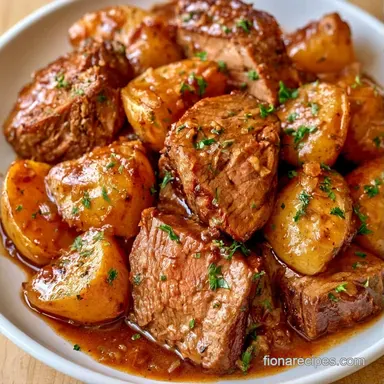
Tender Pot Roast with Gold Potatoes
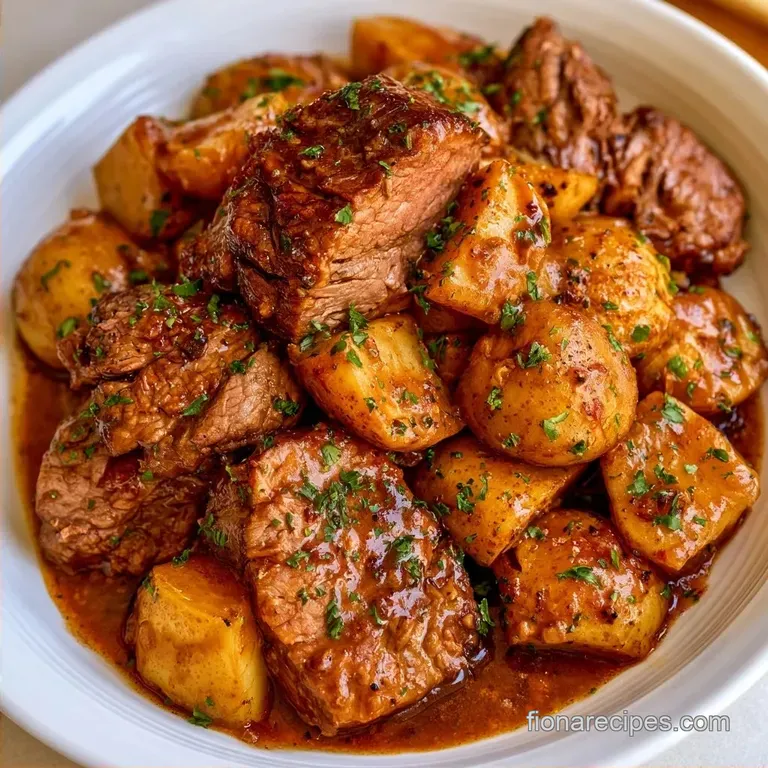
- Time: 20m prep + 8h total
- Highlights: Deep mahogany beef and buttery, waxy potatoes
- Ideal for: Hearty Sunday family dinners or easy meal prep
Making a Pot Roast with Gold Potatoes
That first hiss when the beef hits the hot oil is the sound of a Sunday afternoon starting right. For a lot of us, this dish is the smell of childhood. It's the kind of meal that defined "home" for generations, rooted in the tradition of using the tougher, cheaper cuts of meat and turning them into something luxurious through patience.
I grew up with a version of this that sat in a heavy pot for hours, filling the whole house with a savory, rich aroma. It wasn't about fancy techniques. It was about the comfort of knowing that by dinner time, the meat would be tender enough to eat with a spoon.
You can expect a meal that feels like a hug on a plate. This Pot Roast with Gold Potatoes gives you a deep, caramelized crust on the beef and vegetables that hold their shape without turning into mush. It's a one pot win that handles the heavy lifting while you go about your day.
Quick Recipe Overview
When you're planning your day, it helps to know exactly how the timing works. Whether you're using a slow cooker for that "set it and forget it" vibe or an oven for a slightly faster result, the goal is the same: breaking down the connective tissue in the beef.
If you want a slightly different twist on the tubers, you might like my Pot Roast with Red Potatoes which offers a different skin texture. But for this version, we're sticking to the buttery gold variety.
| Goal | What to change |
|---|---|
| More Gravy | Add 1 extra cup of beef broth |
| Faster Cook | Use the oven at 300°F (150°C) |
| Less Wine | Swap red wine for extra broth |
Gathering Your Essentials
Make sure you brown the meat first. I tried skipping this step once to speed things up, but the result was a bland, boiled mess. Searing is essential for building a rich, complex flavor profile that you can't achieve otherwise.
For the Beef & Sear
- 3 lbs beef chuck roast Why this? Its collagen content ensures tenderness during braising
- 2 tbsp vegetable oil Why this? It can handle high heat without burning
- 1 tsp kosher salt
- 1 tsp cracked black pepper
For the Braising Liquid
- 2 cups low sodium beef broth Why this? It creates the foundation for the gravy
- 1 cup dry red wine Why this? The acidity balances the richness of the meat
- 2 tbsp Worcestershire sauce Why this? Enhances the savory, umami profile
- 4 cloves garlic, smashed
- 2 bay leaves
For the Vegetable Base
- 1.5 lbs Yukon Gold potatoes, halved or quartered Why this? Their buttery flavor and firm texture hold up well
- 1 lb carrots, cut into 2 inch chunks
- 1 large yellow onion, wedged
For the Thickened Gravy
- 2 tbsp cornstarch
- 2 tbsp cold water
| Original Ingredient | Substitute | Why It Works |
|---|---|---|
| Beef Chuck | Bottom Round | Leaner option. Note: Can be a bit tougher |
| Dry Red Wine | Beef Broth + 1 tbsp Balsamic | Replicates the color and tang of wine |
| Yukon Gold Potatoes | Baby Potatoes | Comparable waxy consistency. Note: Leave them whole |
Tools You'll Need
Specialty equipment isn't necessary for this recipe. A few simple tools will suffice. I recommend a heavy skillet for the sear and a Dutch oven or slow cooker for the slow braise.
- Large skillet (stainless steel or cast iron)
- Slow cooker or Dutch oven with a tight lid
- Tongs for flipping the meat
- Whisk for the gravy slurry
- Paper towels (essential for drying the meat)
Steps from Prep to Plate
- Dry the beef chuck with paper towels and season well with salt and pepper. Note: Removing surface moisture ensures a better sear
- Warm vegetable oil in a pan over medium-high heat. Sear the beef for 5–7 minutes on each side until a dark, mahogany crust forms, then move the meat to a Dutch oven or slow cooker.
- Arrange onion wedges at the bottom of the pot. Pack Yukon Gold potatoes and carrots around the beef. Note: The onions create a natural rack to lift the meat
- Pour in the beef broth, red wine, Worcestershire sauce, and minced garlic until the liquid reaches the halfway point of the meat. Top with bay leaves.
- Cook on Low for 8 hours in a slow cooker, or cover and bake at 300°F (150°C) for 3–3.5 hours until the meat is fork-tender.
- Move the beef and vegetables to a large platter.
- Mix cornstarch and cold water into a smooth slurry.
- Whisk the slurry into the simmering liquid and cook until the gravy is thick and glossy.
Fixing Common Kitchen Issues
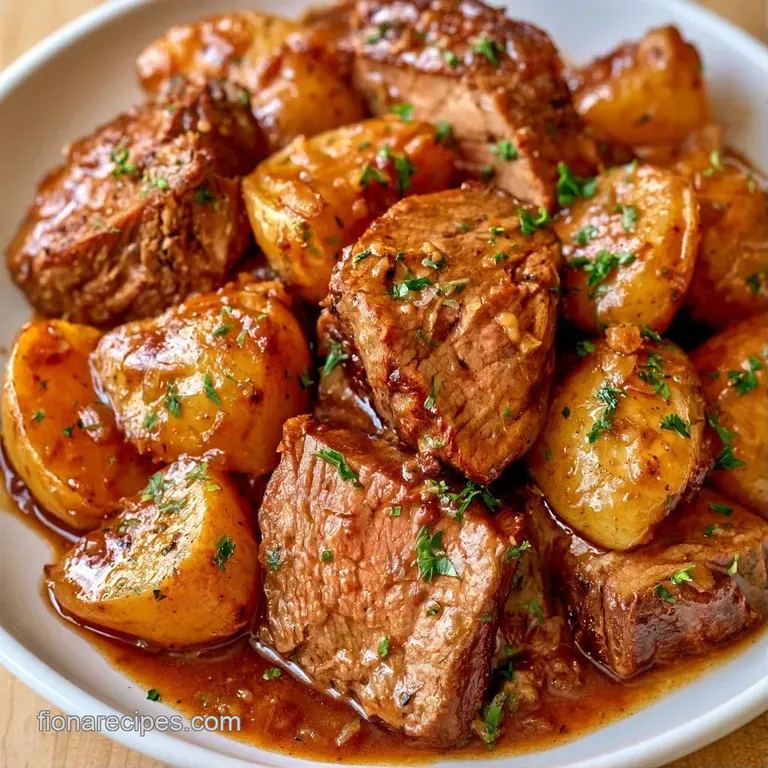
It's easy to feel a bit nervous when you're dealing with a large piece of meat. Most issues are actually very easy to fix if you know what to look for.
Meat feels tough
If the beef doesn't shred easily, it just needs more time. The collagen hasn't fully turned into gelatin. Put it back in for another 45 minutes.
Potatoes are mushy
This usually happens if the potatoes are too small or if you overcook them on high heat. Cut them into larger, uniform chunks to prevent this.
Gravy is too thin
If your sauce is more like a soup, you didn't use enough slurry or didn't simmer it long enough. Whisk in a bit more cornstarch mixed with water and heat it through.
| Problem | Fix |
|---|---|
| Tough Meat | Simmer for 45-60 more minutes |
| Mushy Veggies | Cut potatoes into larger chunks |
| Thin Gravy | Add more cornstarch slurry |
Trying Different Variations
While the original version is a classic, you can tweak this to fit your mood. I often add a splash of soy sauce if I want a saltier, deeper flavor. If you're looking for more vegetable variety, my Pot Roast with Baby Carrots is a great alternative.
For a more rustic feel, try using a mix of gold and red potatoes. This gives the plate a bit of color and a slightly different set of textures. You can also swap the red wine for a dark beer, which gives the Pot Roast with Gold Potatoes a bit of a malty, earthy undertone.
If you're watching your carbs, you can replace the potatoes with radishes or turnips. They soak up the braising liquid similarly, though the flavor is slightly more peppery.
| Method | Time | Result |
|---|---|---|
| Slow Cooker | 8 hours | Extremely tender, deep flavor |
| Dutch Oven | 3.5 hours | Slightly more concentrated sauce |
Keeping Your Leftovers Fresh
This meal is even more delicious on day two. The ingredients blend together more deeply, and the meat soaks up every bit of that rich gravy.
Keep your beef and vegetables chilled in a sealed container for 3 days. It's best to store the gravy in its own jar so the potatoes don't get mushy from absorbing too much liquid.
When reheating, warm a serving in a pan over medium heat with a bit of broth. Use a lid for several minutes to steam the beef. Steer clear of the microwave, as it often leaves the meat with a rubbery texture.
To reduce waste, save any remaining braising liquid. After straining, it makes a great foundation for French onion soup or a beef stew. You can also turn carrot tops into a fast pesto by blending them with lemon, nuts, and oil.
Best Sides for Roast
Since the Pot Roast with Gold Potatoes provides both the meat and the main starch, you simply need a refreshing side to balance the richness.
A zesty garden salad with a citrus dressing is my favorite choice; the acidity cuts right through the fat of the chuck roast. Steamed green beans or roasted asparagus are also excellent options to add some snap to the plate.
If you're hosting a crowd, crusty sourdough bread is a must. It is perfect for mopping up every last drop of that glossy gravy.
Why This Method Works
The secret to this dish is the slow tenderizing of the beef. Since beef chuck comes from a hardworking muscle, it contains a lot of tough connective tissue.
The Collagen Shift: Maintaining low heat over several hours transforms collagen into gelatin. This process allows the meat to "melt" and gives the sauce a rich, velvety texture.
Waxy Potatoes: Yukon Golds are waxy rather than starchy. This allows them to maintain their structure during an 8 hour simmer, whereas Russets would likely disintegrate into the sauce.
Per USDA guidelines, beef is safe at an internal temperature of 145°F, but for a pot roast, you should aim for 190-200°F to ensure the connective tissue has fully broken down.
Chef's Note: Allow the meat to rest for 15 minutes before shredding or slicing. Cutting it too soon allows the juices to escape onto the board, which leaves the beef dry.
Searing Myths
A common misconception is that searing "seals in the juices." It actually doesn't; you actually lose more moisture when searing over high heat. However, this process triggers the Maillard reaction, creating a depth of flavor that a slow cooker alone cannot achieve.
Potato Truths
You don't actually need to peel gold potatoes. Yukon Gold skins are thin and perfectly edible, and they further help the potatoes stay intact throughout the long cooking process.
Now you are fully prepared to make a fantastic Pot Roast with Gold Potatoes. It is a relaxed meal that provides maximum comfort. If you are patient with the cooking time, you'll have a dinner that everyone at the table will love.
High in Sodium
980 mg 980 mg of sodium per serving (43% 43% of daily value)
The American Heart Association recommends a daily sodium limit of 2,300 mg for most adults to maintain heart health.
Tips to Reduce Sodium
-
Swap the Broth-30%
Replace the low-sodium beef broth with homemade unsalted beef stock or a mixture of water and extra aromatics.
-
Reduce Added Salt-25%
Cut the kosher salt in half or omit it entirely, relying on the natural flavors of the roast and vegetables.
-
Limit Worcestershire Sauce-20%
Use only 1 tablespoon of Worcestershire sauce instead of two, or substitute with a splash of balsamic vinegar for acidity.
-
Enhance with Aromatics
Add fresh rosemary, thyme, or smoked paprika to increase the depth of flavor without adding any sodium.
Recipe FAQs
How do I cook roast in a crock pot?
Sear the meat in a skillet first, then place it on wedged onions with vegetables and liquids. Cook on Low for 8 hours until the beef is fork-tender.
Which potato is best for pot roast?
Yukon Gold potatoes are the ideal choice. They maintain their shape during long cook times while providing a creamy interior.
Is it true that red potatoes work just as well as gold ones?
Not true. Red potatoes have a waxier texture and do not absorb the savory braising liquids as effectively as gold potatoes.
What should I do if my meat is still tough?
Continue simmering the roast for another 30 to 60 minutes. Toughness typically means the connective tissue hasn't fully broken down yet.
Should I use the oven or a slow cooker?
The oven is faster at 300°F for about 3 hours, whereas the slow cooker is better for set-and-forget convenience. Both methods produce tender results.
What sides pair well with this meal?
A crisp green salad provides a fresh contrast to the rich, heavy meat. Try pairing this with a Cobb salad to balance the plate.
What's the secret to thick gravy?
Whisk cornstarch and cold water into a slurry. Stir this mixture into the simmering pot liquid until it becomes glossy and thick.
Can other beef cuts be used instead of chuck?
Chuck roast is the best option because its high fat content prevents the meat from drying out. Leaner cuts often become tough during an 8-hour cook.
Slow-Cooked Pot Roast with Gold Potatoes