Spinach Salmon Pasta: Creamy & Quick
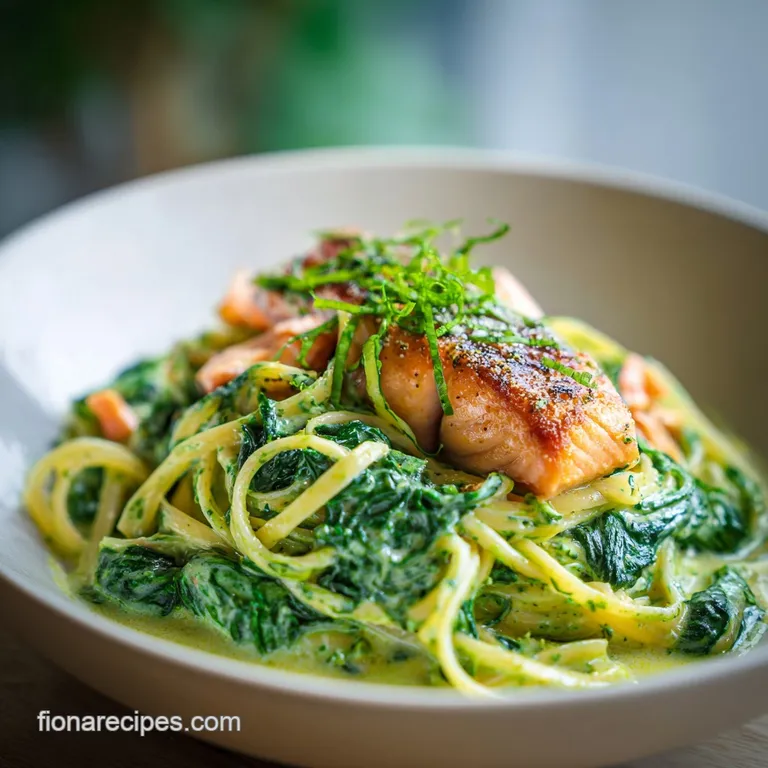
- Time: Active 15 minutes, Passive 10 minutes, Total 25 minutes
- Flavor/Texture Hook: Flaky pan seared salmon nestled in a velvety, lemon kissed cream sauce with tender wilted greens.
- Perfect for: Weeknight family comfort, impressive date nights, or a quick protein heavy lunch.
- Techniques for a Flawless Spinach Salmon Pasta
- Planning for Stress Free Family Dinners
- Elements Required for the Best Flavor
- Optimal Tools for Professional Searing Results
- Methodical Steps for a Velvety Finish
- Strategies for Preventing Common Recipe Errors
- Flexible Flavor and Pantry Swaps
- Guidelines for Scaling and Portions
- Debunking Common Salmon Cooking Myths
- Storing Leftovers and Avoiding Waste
- Simple Touches for Beautiful Plating
- Recipe FAQs
- 📝 Recipe Card
Techniques for a Flawless Spinach Salmon Pasta
The first time I tried to make this, it was a total disaster. I threw everything into one pan, hoping for the best, and ended up with rubbery fish and a sauce that looked more like gray soup.
I stood over the stove, staring at a wasted pound of beautiful Atlantic salmon, feeling like I’d failed the Tuesday night dinner challenge. But that’s the thing about home cooking you learn more from the soggy pasta than the perfect ones.
Everything changed when I stopped treating the fish and the sauce as the same entity. I remember the exact moment the "sizzle" of the salmon hitting the cast iron finally sounded right. It wasn't just noise; it was the sound of a crust forming, protecting the delicate fats inside.
When I finally combined that crispy edged salmon with a cream cheese base that I'd thinned out with a splash of starchy pasta water, it was a lightbulb moment. The sauce became velvety, not heavy, and the spinach stayed bright green instead of turning into a swampy mess.
We’ve all had those nights where we want something that feels fancy but fits into a thirty minute window between work and chores. This Spinach Salmon Pasta is exactly that. It's a reliable, real food win that actually gets my kids to eat their greens without a single complaint.
Trust me, once you see how that cream cheese melts into the pasta water to create a professional grade emulsion, you'll never go back to the jarred stuff.
The Physics of the Velvet Sauce
Starch Emulsification: Adding reserved pasta water to cream cheese creates a stable emulsion where starch molecules prevent the fats from separating or "breaking." This results in a silky coating that grips the linguine rather than sliding off to the bottom of the bowl.
Carryover Protein Heat
Thermal Momentum: Salmon continues to cook for several minutes after being removed from the pan due to internal heat. Pulling the fillets off the heat at 140°F ensures they reach the ideal 145°F during the resting phase, preventing the dry, chalky texture often found in overcooked fish.
| Salmon Thickness | Target Internal Temp | Rest Time | Visual Finish Cue |
|---|---|---|---|
| 0.75 inch | 140°F | 3 minutes | Center is opaque and flakes easily |
| 1.0 inch | 140°F | 4 minutes | Light pink center with golden crust |
| 1.25 inches | 140°F | 5 minutes | Firm to touch with visible fat "curd" |
Chef Tip: Freeze your lemon for 5 minutes before zesting. It firms up the skin, making it significantly easier to get those bright, yellow curls without digging into the bitter white pith.
Planning for Stress Free Family Dinners
Success with this Spinach Salmon Pasta comes down to the rhythm of your kitchen. If you try to dice your shallots while the salmon is already searing, you’re going to feel rushed, and that’s when mistakes happen. I like to think of this as a three act play: the prep, the sear, and the silk.
We start by getting the water boiling because that's our longest lead time, giving us space to prep the aromatics.
Once the pasta hits the water, the clock starts. You have exactly 10 to 12 minutes to get that salmon seared and the sauce base started. It feels fast, but it’s a controlled speed.
While the pasta finishes its dance in the pot, the salmon rests on a plate, gathering its juices back into the center. This resting period is non negotiable if you flake the fish too early, all that moisture ends up on the cutting board instead of in your mouth.
| Component | Science Role | Pro Secret |
|---|---|---|
| 4 oz Cream Cheese | Emulsifier and base | Use full fat room temp blocks for the smoothest melt |
| 0.25 cup Pasta Water | Liquid gold binder | The starch acts as "glue" between the oil and water |
| 1.25 lbs Salmon | Primary protein | Pat the skin side bone dry to ensure a shatter crisp sear |
The beauty of this timeline is that everything converges at the end. The spinach goes into the hot pasta just as you’re whisking the cream, meaning the greens wilt from the residual heat rather than being boiled into oblivion. If you're looking for another creamy winner for your rotation, our Spinach Quiche Recipe uses a similar philosophy of balancing greens with a rich, silky custard.
Elements Required for the Best Flavor
I’m a firm believer that you don't need a hundred ingredients to make a meal taste like it came from a bistro. You just need the right ones. For this Spinach Salmon Pasta, we’re looking for a balance of high fat richness and sharp acidity.
The smoked paprika on the salmon isn't just for color; it adds a subtle depth that cuts through the creaminess of the heavy cream and parmesan.
- 1.25 lbs fresh salmon fillets: Skin removed. Look for bright, firm flesh that doesn't smell "fishy." Why this? Salmon provides the essential omega-3s and a hearty texture that stands up to pasta.
- 12 oz linguine: The flat surface area is superior for holding onto cream based sauces. Why this? It offers a more substantial "bite" than spaghetti or angel hair.
- 4 oz full fat cream cheese: Cubed and at room temperature. Why this? It creates an instant, tangy thickness without needing a flour based roux.
- 5 oz fresh baby spinach: Cleaned and dried. Why this? It wilts instantly and adds a necessary earthy contrast to the rich fish.
- 3 cloves garlic & 1 large shallot: Finely diced. Why this? Shallots offer a sweeter, more refined flavor than standard yellow onions.
- 0.5 cup heavy cream & 0.5 cup parmesan: The duo for decadence. Why this? They provide the velvety mouthfeel and salty umami kick.
- 1 tbsp lemon juice & 1 tsp zest: The "brightness" factor. Why this? Acid breaks up the fat, making the dish feel light rather than heavy.
| Original Ingredient | Substitute | Why It Works |
|---|---|---|
| 12 oz Linguine | Penne or Fusilli | Grooves trap the sauce well. Note: Texture is less silky, more "chunky." |
| 0.5 cup Heavy Cream | Whole Milk + 1 tbsp Butter | Mimics the fat content. Note: Sauce will be slightly thinner. |
| 1 large Shallot | Half a Red Onion | Provides a similar sharp bite. Note: Onion flavor is much more aggressive. |
Optimal Tools for Professional Searing Results
You don’t need a kitchen full of gadgets, but a few specific pieces of equipment will make your life much easier. For the salmon, a heavy bottomed skillet is your best friend. I swear by my cast iron, but a high-quality stainless steel pan works wonders too.
The goal is heat retention you want a pan that doesn't drop in temperature the second the cold fish touches it.
A large pasta pot is also essential. You need enough water for the linguine to move freely; otherwise, it releases too much starch in too little space and becomes a gummy mess. And please, use a microplane for the lemon zest and garlic.
It turns them into a paste that dissolves into the sauce, giving you all the flavor without any awkward chunks of raw garlic.
Chef Tip: Use a fish spatula if you have one. The thin, flexible metal can slide under the delicate salmon crust without breaking the fillet apart, which is a common tragedy in most kitchens.
Methodical Steps for a Velvety Finish
- Prep the Salmon. Pat your 1.25 lbs of salmon completely dry with paper towels, then rub with 1 tsp smoked paprika, 1 tsp kosher salt, and 0.5 tsp black pepper. Note: Moisture is the enemy of a good sear.
- Boil the Pasta. Drop 12 oz linguine into a pot of salted boiling water. Cook 1 minute less than the package directions for true al dente.
- Sear the Fish. Heat 1 tbsp olive oil in a skillet over medium high heat. Place salmon in the pan until a golden crust forms and it releases easily, about 4 to 5 minutes per side.
- Rest and Flake. Remove salmon to a plate and let it rest for 5 minutes. Use a fork to flake it into large, bite sized chunks.
- Sauté Aromatics. In the same skillet, add the diced shallot and 3 cloves of minced garlic. Cook until softened and fragrant but not browned, about 2 minutes.
- Build the Base. Lower heat to medium. Stir in 0.5 cup heavy cream and 4 oz cubed cream cheese. Whisk until the cheese is completely melted and smooth.
- The Starch Addition. Slowly whisk in 0.25 cup of reserved pasta water into the sauce. Note: This creates the emulsion.
- The Greens Drop. Toss in 5 oz fresh baby spinach. Stir until the leaves just begin to collapse and turn bright green.
- Combine and Emulsify. Add the cooked linguine, 0.5 cup parmesan, 1 tbsp lemon juice, and 1 tsp zest. Toss vigorously until every strand is coated in a velvety sheen.
- The Final Fold. Gently fold the salmon flakes back into the pasta. Serve immediately while the sauce is at its peak silkiness.
If you enjoy the way seafood interacts with pasta, you might also love my Shrimp Scampi Pasta recipe, which focuses on a lighter, garlic butter emulsion that’s equally fast for weeknights.
Strategies for Preventing Common Recipe Errors
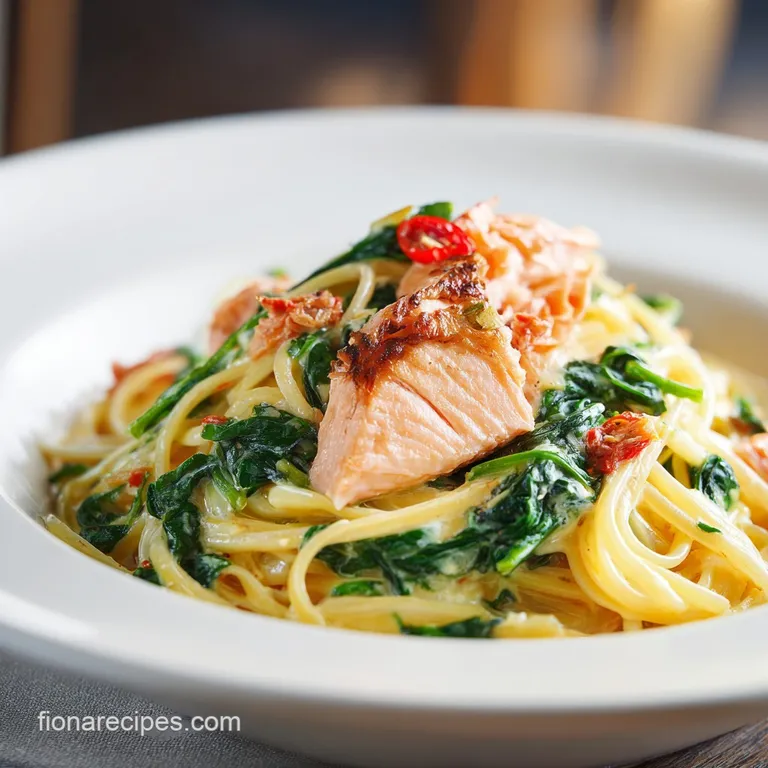
The biggest heartbreak in this dish is a "broken" sauce. This happens when the heat is too high, and the fat in the cream cheese or parmesan separates from the liquid, leaving you with a grainy, oily mess. If you see little oily droplets forming, don't panic.
Take it off the heat immediately and whisk in a tablespoon of hot pasta water. The starch will often act as a bridge and bring the sauce back together.
Fixing a Grainy Sauce
If your sauce looks curdled, it’s usually because the parmesan was added to a boiling liquid. Hard cheeses like parmesan need to be melted into a warm, but not bubbling, environment.
Next time, turn the stove off entirely before tossing in the cheese; the residual heat of the pasta is more than enough to melt it into a silky finish.
Preventing Fishy Aromas
Salmon shouldn't smell like the ocean in a bad way. If your fish has a strong odor, it’s likely due to oxidation. A quick trick is to soak the fillets in a bit of milk for 15 minutes before patting them dry.
The proteins in the milk bind to the trimethylamine (the "fishy" compound) and pull it away.
| Problem | Root Cause | Solution |
|---|---|---|
| Salmon is dry | Overcooked beyond 145°F | Remove from pan at 140°F and rest |
| Sauce is too thick | Excessive evaporation | Whisk in extra pasta water 1 tbsp at a time |
| Spinach is slimy | Overcooked in the sauce | Add at the very end and toss off the heat |
Common Mistakes Checklist
- ✓ Skipping the salmon pat dry step (results in steaming, not searing)
- ✓ Throwing away all the pasta water before saving a cup (you’ll need that starch)
- ✓ Using pre shredded parmesan (the cellulose coating prevents a smooth melt)
- ✓ Overcrowding the skillet with salmon (it drops the pan temp too fast)
- ✓ Forgetting to zest the lemon before juicing it (it's nearly impossible the other way around)
Flexible Flavor and Pantry Swaps
One of the reasons I keep this Spinach Salmon Pasta in my "emergency" rotation is that it’s incredibly adaptable. If you don't have fresh salmon, you can actually use high-quality canned salmon or even smoked salmon.
Just be sure to skip the searing step and fold the fish in at the very end to avoid making it overly salty or mushy.
The Healthy Spinach Salmon Pasta Without Cream
If you're looking to lighten things up, you can swap the heavy cream for a splash of chicken broth and an extra dollop of pasta water. The cream cheese still provides enough body to make it feel indulgent without the extra calories of the cream. For another family friendly adaptation that uses a different protein base, check out our Garlic Parmesan Chicken recipe.
| Servings | Salmon Weight | Pasta Amount | Spinach Volume |
|---|---|---|---|
| 2 People | 0.6 lbs | 6 oz | 2.5 oz |
| 4 People | 1.25 lbs | 12 oz | 5 oz |
| 6 People | 1.8 lbs | 18 oz | 7.5 oz |
Guidelines for Scaling and Portions
Scaling this recipe up for a dinner party is a breeze, but you have to be careful with the skillet size. If you’re doubling the recipe to serve eight, do not try to sear all the salmon in one go. You’ll end up with gray, boiled fish.
Work in batches, keeping the first round of salmon warm under a loose tent of foil while you finish the rest.
For the sauce, when doubling, you only need to increase the liquids (cream and pasta water) by about 75% rather than a full 100%. Large batches of pasta tend to hold onto more moisture, and you don't want the linguine swimming in a soup.
If scaling down for one or two, remember that the cooking time for the salmon stays exactly the same don't cut the searing time in half just because you have fewer fillets!
Debunking Common Salmon Cooking Myths
There’s a massive myth that you should only flip salmon once. Honestly, if you’re a beginner, flipping it a couple of times can actually help you monitor the crust and ensure even cooking. Professional chefs often flip multiple times to control the heat transfer.
As long as you wait for that initial sear to release the fish from the pan naturally, you won't tear the flesh.
Another one I hear all the time is that the white stuff (albumin) leaking out of the salmon means it's bad. It’s actually just a protein that coagulates and pushes to the surface when the muscle fibers contract.
While it’s harmless, it usually means the fish is cooking a little too fast or getting a bit overdone. Lowering the heat slightly can help keep your fillets looking pristine.
Storing Leftovers and Avoiding Waste
Let’s be real: cream based pasta is never quite as good the next day, but it’s still a 10/10 lunch if you do it right. Store your leftovers in an airtight container in the fridge for up to 2 days.
When reheating, don't just zap it in the microwave on high, or the sauce will split into a greasy mess. Add a teaspoon of water or milk and heat it on 50% power, stirring halfway through to redistribute the moisture.
Don't toss those lemon halves or spinach stems! You can toss the spent lemon into a pot of water for a quick kitchen deodorizer, and the stems of the baby spinach are perfectly edible just chop them finely and sauté them right along with the shallots for extra fiber and zero waste. If you find yourself with extra salmon, it makes a killer addition to our Stuffed Pasta Shells recipe the following night.
Simple Touches for Beautiful Plating
We eat with our eyes first, and a monochrome bowl of pasta can look a bit dull. I like to save a pinch of the lemon zest and a few small flakes of salmon to perch right on top of the pasta mounds. It signals to whoever is eating what’s actually inside the dish.
A final, aggressive crack of black pepper and a sprinkle of fresh parsley adds that pop of color that makes a "Tuesday night meal" feel like a special occasion.
When serving, try using a carving fork to twirl the linguine into a high nest in the center of the bowl. This creates height and keeps the pasta from spreading out and cooling down too quickly. It's a small trick that takes ten seconds but makes the whole experience feel much more intentional.
Right then, let’s get that water boiling you’re going to love this one!
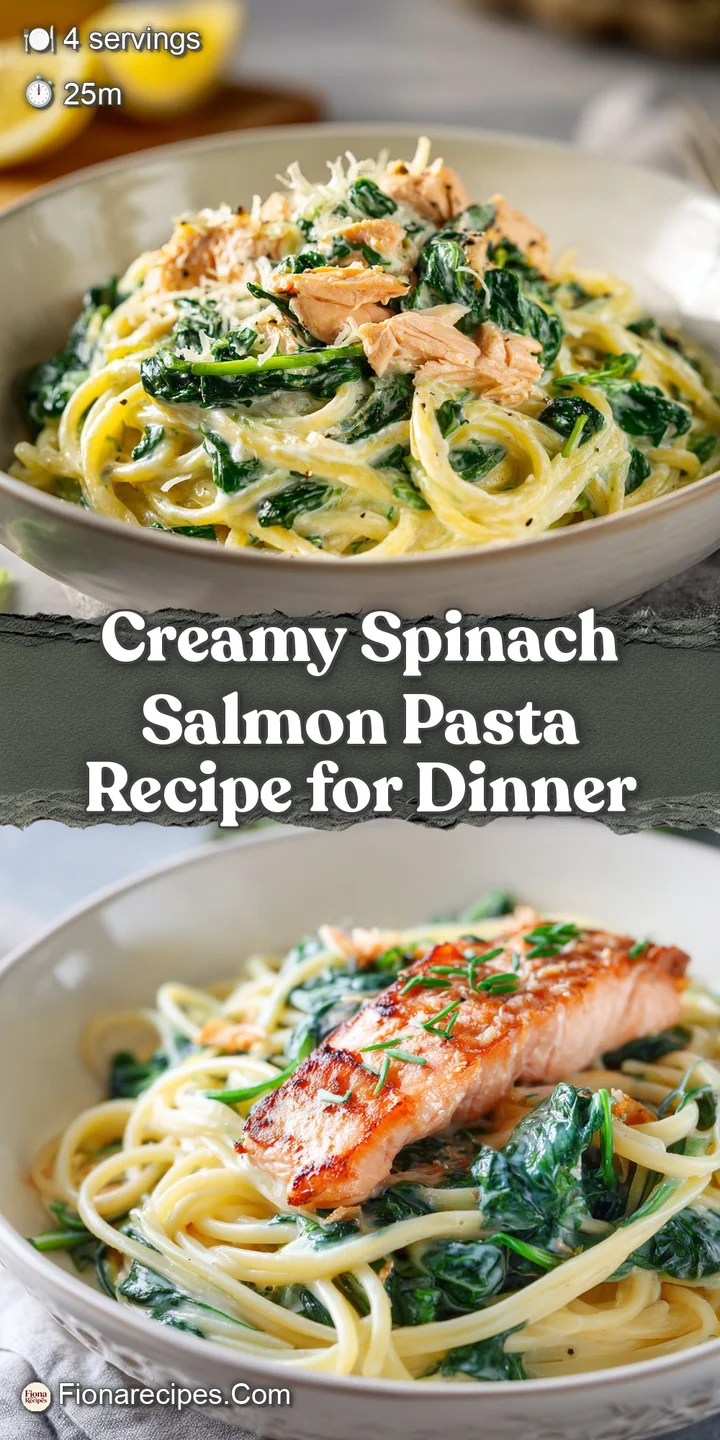
Recipe FAQs
Can I use frozen salmon instead of fresh for this recipe?
Yes, but thaw completely first. Ensure the salmon is fully thawed and aggressively patted dry; moisture from thawing will steam the fish instead of searing it properly.
How do I prevent the cream cheese sauce from separating or becoming grainy?
Remove the pan from the heat before adding cheese and parmesan. The high heat causes the fats to break away from the liquid; use residual heat and whisk in reserved starchy pasta water to stabilize the emulsion.
What is the optimal method for searing the salmon perfectly?
Heat oil in a heavy skillet until shimmering, then place seasoned salmon in and let it sear untouched for 4-5 minutes. Wait until it naturally releases from the pan before attempting to flip to ensure a crisp crust forms.
Is it true that using regular milk instead of heavy cream results in the same sauce texture?
No, milk will result in a much thinner sauce. To mimic the richness, swap the heavy cream for whole milk combined with an extra tablespoon of butter, though the cream base is superior for a velvety coating.
How can I make this recipe lighter by eliminating the cream entirely?
Substitute the heavy cream with an equal amount of broth and add an extra tablespoon of reserved pasta water. The starch from the water helps bind the sauce, compensating for the removed fat content.
Should I cook the spinach separately or just toss it in the sauce?
Toss it directly into the sauce just before combining everything. The residual heat from the sauce and pasta is sufficient to wilt the baby spinach quickly, keeping its color bright and texture appealing.
What pasta shape works best to hold this rich, creamy sauce?
Linguine or fettuccine are ideal because their flat surface area clings well to the sauce. If you prefer shapes with ridges, fusilli works well by trapping the sauce inside its twists, similar to how it functions in a Creamy Mushroom Pasta recipe.
Spinach Salmon Pasta In 25
Ingredients:
Instructions:
Nutrition Facts:
| Calories | 867 calories |
|---|---|
| Protein | 47 grams |
| Fat | 45 grams |
| Carbs | 70 grams |
| Fiber | 4 grams |
| Sugar | 5 grams |
| Sodium | 640 milligrams |
