Chocolate Hazelnut Paris Brest Recipe
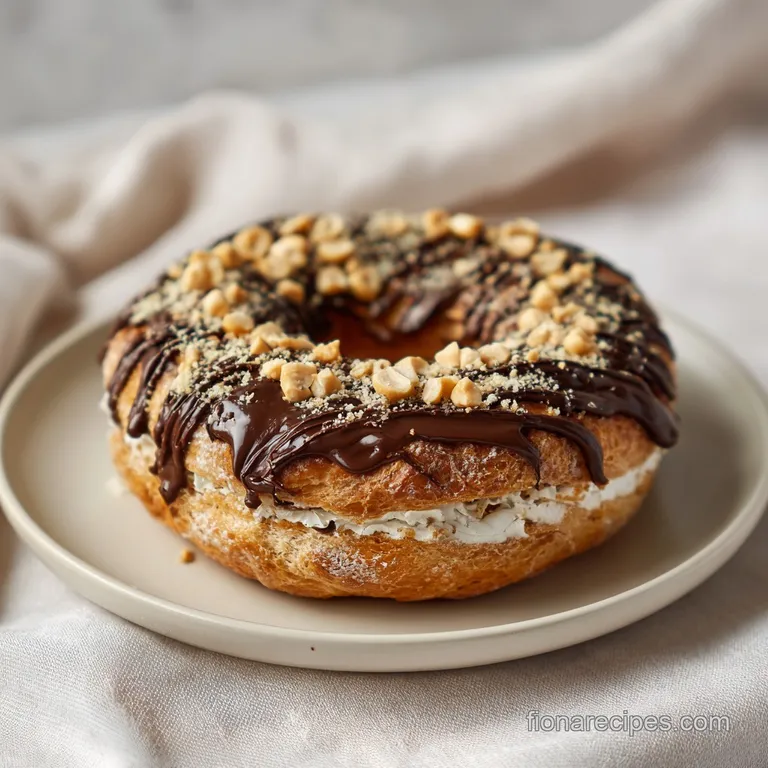
- Time: Active 45 minutes, Passive 35 minutes, Total 1 hours 20 mins
- Flavor/Texture Hook: Shattering craquelin crust with velvety hazelnut mousse
- Perfect for: Technical baking challenges or impressive dinner party finales
- Mastering This Chocolate and Hazelnut Paris Brest Recipe
- The Molecular Science of Steam Rise
- Precise Component Analysis Table
- Gathering Your Filling Elements
- Technical Equipment for Flawless Rings
- Step-by-Step Instructions and Assembly
- Troubleshooting Guide for Pastry
- Precision Control Checkpoints
- Flavor Variations to Try
- Practical Make-Ahead and Storage Guidelines
- Professional Presentation and Plating
- Recipe FAQs
- 📝 Recipe Card
Mastering This Chocolate and Hazelnut Paris Brest Recipe
There is a specific sound that defines a successful bake: the hollow thump when you tap the bottom of a golden choux ring. I still remember the first time I pulled a batch from the oven that didn't deflate into a sad, rubbery pancake.
The kitchen smelled like toasted hazelnuts and caramelized sugar, and that first bite the way the craquelin shattered against the velvety chocolate haznut mousseline was the moment I realized baking isn't magic, it's physics.
We are aiming for a pastry that honors the classic 1891 bicycle race inspiration but adds a deep, modern richness. This isn't a project you just throw together; it's an exercise in temperature control and moisture management.
You'll learn why we dry out the dough on the stove and how to emulsify a mousseline cream that holds its shape without feeling heavy. Trust me, once you master these specific ratios, you'll never look at store-bought eclairs the same way again.
The Molecular Science of Steam Rise
Starch Gelatinization: Heating the flour with liquid causes starch granules to swell and burst, creating a structural "gel" that traps steam.
Protein Coagulation: Eggs provide the structure that stretches as steam expands, then sets firmly in the heat to prevent collapse.
Emulsion Stability: The mousseline relies on the precise temperature of butter to incorporate into the pastry cream without breaking the fat bonds.
| Baking Environment | Temperature | Texture Outcome | Best For |
|---|---|---|---|
| Convection Oven | 350°F | Even rise, very dry shell | Professional, uniform finish |
| Conventional Oven | 375°F | Higher initial puff, darker bottom | Home kitchens with hot spots |
| Toaster Oven | 350°F | Rapid browning, risk of soft center | Small batches of 2-3 rings |
To achieve the best results with this chocolate and hazelnut paris brest recipe, understanding how your oven moves air is vital. If you find your pastry browning too fast, it is often a sign that the sugar in the craquelin is carmelizing before the interior steam has finished its work. This is similar to the careful heat management I use when making a Blueberry Scones Recipe to ensure the centers aren't gummy.
Precise Component Analysis Table
| Ingredient | Science Role | Pro Secret |
|---|---|---|
| Whole Milk | Adds protein and lactose | Use full fat for a more flexible, less brittle shell structure |
| Bread Flour | High gluten content | Provides the "muscle" needed to hold the weight of the craquelin |
| Large Eggs | Leavening and structure | Weigh them; "4 eggs" can vary by 20g, which ruins the hydration |
| Hazelnut Praliné | Flavor and fat source | Look for 100% nut content to avoid excess sweetness in the mousse |
Gathering Your Filling Elements
For the Crunchy Craquelin
- 40g unsalted butter, softened Why this? Provides the fat base for a sandy, crumbly topping.
- 50g light brown sugar
- 50g all purpose flour
- 1 pinch sea salt
For the Choux Pastry (Pâte à Choux)
- 125ml water
- 125ml whole milk Why this? Milk encourages better browning than water alone.
- 110g unsalted butter, cubed
- 5g granulated sugar
- 2g salt
- 145g all purpose flour, sifted
- 4 large eggs, room temperature
For the Chocolate Hazelnut Mousseline
- 250ml whole milk
- 3 large egg yolks Why this? Yolks provide lecithin for a stable, silky emulsion.
- 40g cornstarch
- 40g granulated sugar
- 100g 100% pure hazelnut praliné or paste
- 60g 70% dark chocolate, finely chopped
- 100g unsalted butter, softened but cool
| Original Ingredient | Substitute | Why It Works |
|---|---|---|
| Hazelnut Praliné | Almond Butter | Similar fat profile. Note: Less "toasted" flavor than hazelnut |
| Light Brown Sugar | Muscovado Sugar | Adds deeper molasses notes and more moisture to the crust |
| 70% Dark Chocolate | Semi sweet (60%) | Slightly sweeter result; reduces the bitter edge of the cocoa |
While you are gathering these ingredients, remember that temperature is an ingredient itself. Cold eggs will shock the warm panade, resulting in a lumpy dough that won't rise. It is the same attention to detail required for a Soft Chocolate Chip recipe where room temperature fats make or break the texture.
Technical Equipment for Flawless Rings
To get that restaurant quality finish, you'll need a few specific tools. A heavy bottomed saucepan is non negotiable for the panade to prevent scorching the milk. I highly recommend a digital scale (such as OXO) because measuring by volume is too imprecise for choux.
You will also need a piping bag fitted with a large star tip (like an Ateco 828) for the classic ridged look, and a perforated silicone mat if you have one, as it allows steam to escape from the bottom of the pastry.
step-by-step Instructions and Assembly
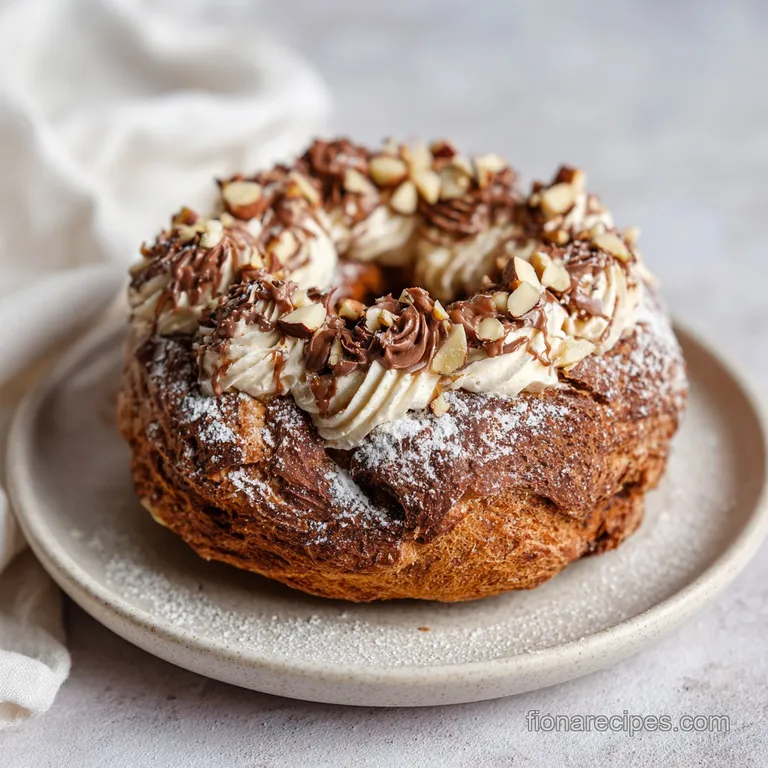
- Prepare Craquelin. Cream 40g butter and 50g brown sugar, then fold in 50g flour and salt. Roll between parchment to 2mm thickness and freeze 20 minutes.
- Boil Liquids. Combine 125ml water, 125ml milk, 110g butter, 5g sugar, and 2g salt in a saucepan. Heat until butter is melted and liquid reaches a rolling boil.
- Cook Panade. Dump in 145g flour all at once. Stir vigorously 2 minutes until a film forms on the bottom of the pan. Note: This evaporates excess moisture.
- Incorporate Eggs. Transfer dough to a bowl. Add 4 eggs one-by-one, beating until the dough forms a "V" shape when lifting the paddle.
- Pipe Rings. Pipe 8 individual 3 inch circles onto parchment. Cut 3 inch circles from the frozen craquelin and place one on each ring.
- Bake Shells. Bake at 375°F for 35 minutes until deep golden and firm to the touch. Do not open the oven door!
- Make Pastry Cream. Whisk 3 yolks, 40g sugar, and 40g starch. Temper with 250ml hot milk. Cook until thick and bubbling, then whisk in 60g chocolate and 100g praliné.
- Whip Mousseline. Once the chocolate base is cool (65°F), beat in 100g softened butter until the mixture is pale, light, and holds stiff peaks.
- Assemble. Slice cooled rings horizontally. Pipe the mousseline into the bottom half and top with the craquelin lid.
Troubleshooting Guide for Pastry
For a Deflated Choux Shell
If your rings come out of the oven looking beautiful but collapse within minutes, the interior walls were likely too moist. Steam needs to be replaced by air to maintain the structure.
| Problem | Root Cause | Solution |
|---|---|---|
| Soft/Soggy Shell | Underbaked or too much egg | Bake 5 mins longer or "vent" the shell with a toothpick |
| Broken Mousseline | Temperature mismatch | Gently warm the bowl while whisking to re emulsify the fat |
| Craquelin Slid Off | Choux was too warm | Ensure craquelin is frozen solid before placing on the dough |
Common Mistakes Checklist
- ✓ Never open the oven door during the first 25 minutes (the sudden temp drop kills the steam).
- ✓ Dry the panade until it reaches 175°F to ensure the flour is fully hydrated.
- ✓ Sift the flour before adding to the liquid to prevent stubborn dry lumps.
- ✓ Use a wooden spoon for the panade; silicone spatulas often lack the leverage needed for vigorous mixing.
- ✓ Ensure the butter for the mousseline is pliable but not greasy or melted.
Precision Control Checkpoints
- The 175°F Rule: The panade must reach this internal temperature on the stovetop to ensure starches are gelatinized.
- The V Drop Test: The final choux paste should hang from a spatula in a smooth, 2 inch triangle without breaking.
- The 65°F Emulsion: The chocolate pastry cream and the butter must both be at room temperature (around 65°F) before combining to prevent curdling.
Customizing Your Pastry Texture
- If you want a more intense nut profile, toast the hazelnuts before making the paste into praliné.
- If you want a lighter filling, fold 50g of whipped heavy cream into the finished mousseline.
- If you want a saltier contrast, sprinkle Maldon sea salt over the craquelin before baking.
Flavor Variations to Try
While the chocolate and hazelnut combination is the gold standard, you can easily adapt this base. For a Salted Caramel Twist, replace the chocolate in the pastry cream with 50g of salted caramel sauce and use a vanilla flecked craquelin.
If you prefer a Pistachio and White Chocolate version, swap the praliné for pistachio paste and use 60g of melted white chocolate in the base. The chemistry remains the same, but the flavor profile shifts entirely.
Practical make-ahead and Storage Guidelines
- Storage
- These are best eaten within 4 hours of assembly for maximum crunch. Store unassembled shells in an airtight container at room temperature for 2 days.
- Freezing
- You can freeze the baked, unfilled shells for up to 1 month. Reheat at 325°F for 5 minutes to crisp them back up before filling.
- Zero Waste
- If you have leftover mousseline, it makes an incredible dip for fruit or a filling for crepes. Leftover egg whites from the pastry cream should be saved for meringues or a healthy breakfast scramble.
Professional Presentation and Plating
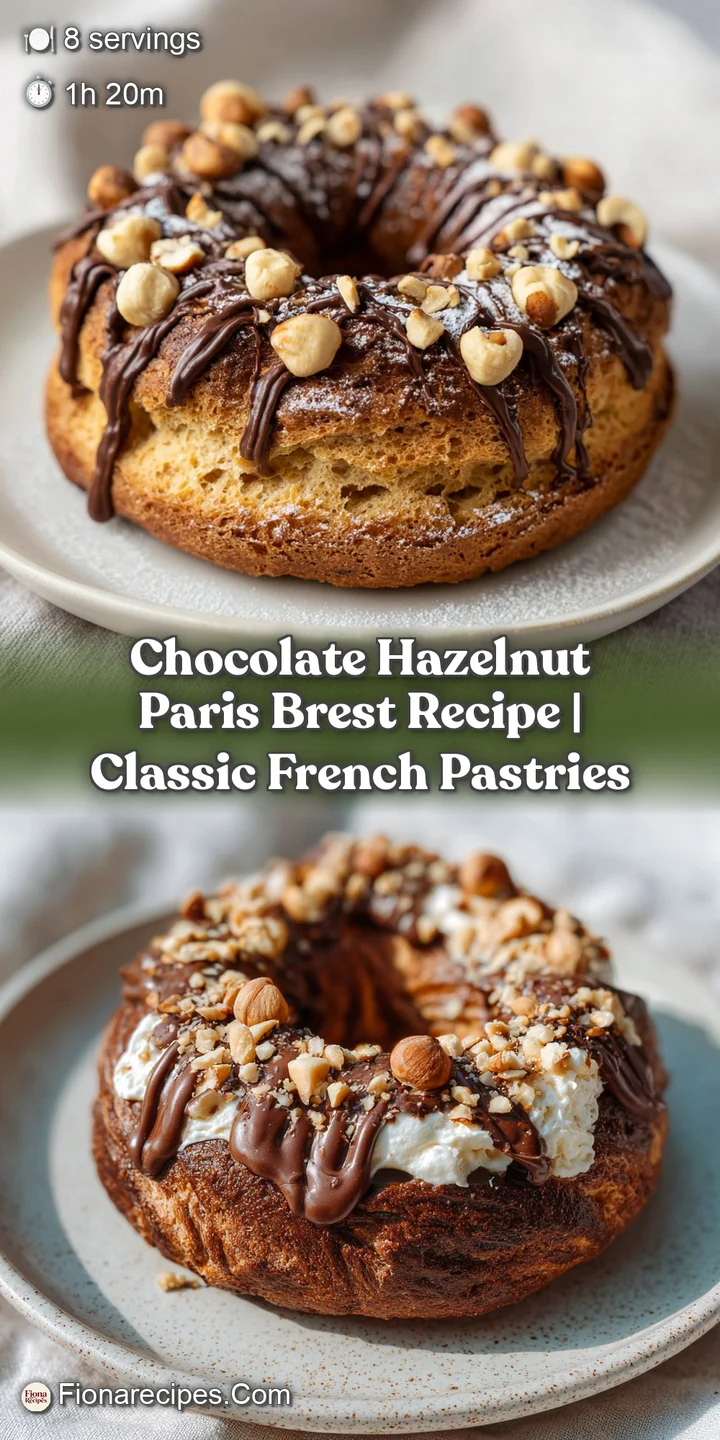
To achieve that "patisserie window" look, use a dusting of powdered sugar over the top lids before placing them on the cream. This prevents sugar from melting into the moist filling. For a more modern approach, place three whole toasted hazelnuts on top of the piped cream before adding the lid.
Serving these on a dark slate or a stark white plate allows the golden color of the craquelin to pop.
Serving Pairings
A bitter espresso or a dark roast coffee cuts through the richness of the hazelnut fats perfectly. If serving for dessert, a glass of Frangelico or a chilled tawny port complements the toasted nut notes without being cloyingly sweet.
For a fruit pairing, fresh raspberries add a necessary acidity that brightens the heavy chocolate.
Recipe FAQs
What is hazelnut Paris Brest?
It is a classic French pastry ring made from choux dough. This version specifically uses hazelnut praliné paste in its creamy filling, providing a deep, toasted nut flavor.
What is chocolate Paris Brest?
It is a Paris Brest variation incorporating dark chocolate into the filling. The chocolate is melted into the pastry cream base before butter is incorporated to create a rich, decadent chocolate hazelnut mousseline.
What is the filling of Paris Brest?
The traditional filling is Mousseline cream, often flavored. This version uses a Mousseline cream made from pastry cream, hazelnut praliné, dark chocolate, and whipped butter for an airy texture.
Why is the dessert called a Paris Brest?
Yes, the name commemorates a bicycle race held between Paris and Brest. It was created in 1891 by pastry chef Louis Durand to celebrate the event; the ring shape represents a bicycle wheel.
How do I prevent the choux rings from deflating after baking?
Bake them until they are deep golden brown and sound hollow when tapped. The structure needs sufficient time for the steam to escape and the starch and egg proteins to fully set.
Can I substitute the milk in the choux dough with water only?
No, using only water results in a drier, less flavorful shell. Substituting milk adds fat and protein which aids in browning and provides a more tender final texture, similar to the added richness you find in our Fudgy Brownies From recipe.
What is the key technique for achieving a stable mousseline filling?
Ensure the pastry cream and the butter are both cooled to roughly 65°F before whipping. If the butter is too warm, it melts into the cream; if too cold, it won't emulsify, resulting in a broken, oily filling.
Chocolate Hazelnut Paris Brest
Ingredients:
Instructions:
Nutrition Facts:
| Calories | 588 kcal |
|---|---|
| Protein | 10.8 g |
| Fat | 42.3 g |
| Carbs | 42.8 g |
| Fiber | 2.4 g |
| Sugar | 12.2 g |
| Sodium | 158 mg |
